Showing posts with label College. Show all posts

Saturday, July 9, 2016

Indian Education: Separating System from Products


Earlier today, I came across this post on the state of education in St. Stephen's College in particular, and India in general. I had first read it nearly three years ago, in the midst of preparing my application for the Rhodes Scholarship. I cannot recollect what emotions it had stirred within me, but do clearly remember my curiosity about who the professor referred to in the article was. I then also read this response by Saattvic, which is what prompted me to message him, and that was the beginning of a valuable friendship. Three years later, having completed an M.Phil. from Oxford, having worked in London for substantial periods of time and having paid taxes (does that entitle me to have an opinion?), I can possibly reflect on my time in India, and how it set me up (or not) for the world out there. I cannot but whole-heartedly agree with Thane's point that the Indian education system is not working. Thane rues the lack of 'inquisitive magnetism' among Indian students, the 'cookie cutter' approach to foreign applications and the 'depressing epiphany' of realising that the Indian student only wants to know what to copy next. I believe there can be little debate about the fact that the Indian education system is not working. However, my point of departure from Thane's argument is that I believe that the education system is not working because it does not know what it is working towards. It is trying to cater to basic educational needs of the masses, while pretending to promote innovation at the same time. Which is what, I believe, leaves the system in the kind of soup that we are in. 

Does that mean I believe that the product coming out of the system is sub-par? Absolutely not. My argument is that this education machine is churning out products - good or bad - but has little role in shaping the nature of the product. I was recently at a discussion with my peers in Rhodes House, and heard the American scholars, in particular, lament about the lack of mentorship in Oxford. I was amazed, and I said it in as many words, because I believed I had access to significantly more mentorship at Oxford than I had ever had (or have needed). The point I am making is this (and Einstein unfortunately beat me to it) - if you judge a fish by its ability to climb a tree, it will live its whole life believing that it is stupid. Similarly, if you judge an Indian student by her ability to write an essay for an Ivy League, you will quite likely be disappointed. But put that Indian student in a situation where she does what she's passionate about, and I'm sure she'll do well. I fail to see how the Indian students' penchant for the professors' dictation (as per Thane) is any different from the Americans' for academic support. There exists an Indian system and an American system, and all the others, and I would be wary of extending the flaws of the system to the products of the system - the students themselves!

In my experience, I have found Indian students particularly enterprising. Many of us adopt a design-to-value approach to academics - for example, when I was forced to study Macroeconomics in the first year of my degree at Oxford (despite having an unambiguous interest in microeconometrics), I simply studied enough to score well. Subsequently, when faced with subjects that I enjoyed in the second year, I did significantly better. Don't get me wrong - I do believe that the Indian student cares greatly about her academic performance. But our endearingly flawed system has taught us to distinguish between learning and academics (sigh) and I believe that it provides an opportunity for us to be less wedded to our academic interests. Some utilise that opportunity, while others don't; and that is a problem that any system - no matter how well designed - will have.

Thane's article offends me slightly because it makes very sweeping statements without much of a fact base. Of course, I understand that he had no option, given that such statistics either do not exist, or are not readily available. I would have preferred a more nuanced approach, but perhaps that makes articles less engaging. I will therefore respond to those generalisations with less-than-rigorous arguments of my own. Firstly, about the substitution of the 'useless Indian liberal arts degrees' with 'real ones' in the west. I was, unfortunately, the only member of my class with an undergraduate degree from India, and I must say I have done reasonably well for myself. Moreover, it seems to me that the percentage is non-lower among Indian Rhodes scholars than Rhodes scholars in general. To me, therefore, the 'best Indian minds' (however defined) are performing equally well academically. This is not a self-congratulatory rant. It is important because, much like Einstein's fish - I was told that I cannot do well in Oxford because I came from an inadequate system. Not true.

Saattvic makes the point about the distinction between the learning cultures in the East and the West. He then lists some challenges with the latter. I would add to it. My experience with students of the Western systems (in the context of the MPhil and Rhodes House) was the expansiveness of their thoughts. I would often talk to them, and wonder why they would choose to use more (and difficult) words to explain concepts that seemed so simple to me. My hypothesis is that they grew up in a system where 'intellectual curiosity' dictated that they engage with the content of their problem very deeply (or simply, that my sample was biased due to the inclusion of Rhodes scholars). The Indian system, I would like to believe, dictates that one addresses the issue and moves on to the next problem. Both have their places. To posit one as intrinsically superior to another can be, in my opinion, reflective of a Euro-centric world view that dismisses something different, rather than engage it to understand its merits.

None of what I wrote here is an endorsement of the Indian educational system. It would be difficult for me to find the (intended) merits of the system. But that doesn't blind me to the merit of the students emerging from this system, or to the cultural intricacies and context of the system. I believe that all of us should mould the system in the ways we feel best. For me, it took two forms. One is my belief in peer-to-peer education as a means to overcome challenges in the educational system (American or India). This lead to my engagement with the fantastic initiative, EurekaWow, and a youtube channel with video lectures on econometrics. Secondly, I was equally concerned by the average Indian students' inability to summarize their life with the skill that those in the west possess. Therefore, I started Absolute Interview to provide a 'cookie clutter' solution (a set of do's and dont's) and one where I invited and reviewed CVs of students from across the country. All of this not because I believe that the 'ability to summarize' is intrinsically valuable, but because I know that the labour market values it, and I would rather that the average Indian student have a 'design-to-value' solution to it than not.

I believe we can do better that critize. We can learn, and then adopt the practices that work best for us. Much will be dictated by the system we grew up in, but a lot will depend on our individual personalities. I found that the Oxford MPhil (with 3-5 exams a year) worked quite well for me (both in terms of learning and lifestyle), but I can easily imagine another person for whom the American system (with lots of supervision) or the Indian one (with lots of examinations, perhaps) works better. All I would guard against is derision - one that is equally applicable to an American judging the Indian system as it is to a St. Stephen's graduate judging one from the Uttar Pradesh hinterland. It is incumbent upon us, the privileged few who are propped up by the existing (labour market) system, to make this system work for those who aren't its natural participants. Let them not be Einstein's fish, please!

Monday, August 31, 2015

A bit of giving

Two weeks back, my Nico and I were dining at a Syrian restaurant in London. When the bill came, he being American wanted to tip 10%. For me, however, tipping was always a bit of an elite game - an act of charity for people who weren't as well of. Coming from India, I have probably been exposed to far more of those who would be called 'Bottom of the Pyramid.' I argued, therefore, that I couldn't tip waiters in London while I know there are people in much worse conditions in India who could probably make much better use of that money. Nico, unfortunately, isn't one to give in so easily. He refused to see the link between the money I saved by not tipping and the money I would give other 'more needy' people. My 'trickle - down' arguments failed to cut much ice either.

After over an hour of arguing over this, Nico proposed a solution - he would pay the entire tip whenever we ate out, and I would have to contribute 50% of that amount to charity at the end of his stay in London. So, from Oxford to Copenhagen, we kept the 'tip tracker' ticking, and by the end of it I owed £14.5 to those in need. Over the last one month of working at an Impact Investing fund, I came across several Kiva - like models, and decided that I was most comfortable and content lending to such a place. So, I decided to contribute a small sum to a group on the website Milaap. The amount will help fund a loan for a group of women in Aizawl, Mizoram, who are seeking to expand their business.

This experiment has forced me to think more actively about transitioning from the world of thoughts and ideas to the world of action. I see three types of giving back to society - money, time and intellect. Money has ranked lowest in my priority because I have always doubted its efficacy at low scale. But then, its a great starting point, and a good way to put your money where your heart (or mouth) is. It's been a great half - year of learning and thinking about social change. Here's hoping I'd be able to do more as the year progresses.

Monday, July 6, 2015

Being Average

In a great scene in an otherwise forgettable Ek Main Aur Ekk Tu, Kareena Kapoor explains to Imran Khan the advantages of being 'average.' Average, she says, is calm; average is predictable; average is easy to live with. I have the advantage that I was once a very mediocre student; I used to work quite hard but didn't perform that well. Am I happier today than I was then? Professional and academic successes have pushed me to new shores, but are these shores that I am happier on? It is difficult to find an answer, of course, because my 'average' years also coincided with my childhood and, ceteris paribus, childhood is a happier period of one's life. Maybe I can turn around the question and locate the sources of unhappiness in my present situation and link it to the lack of 'averageness.'

I dislike the fact that I have no 'home' to return to; that my 'home' is a room that only I live in. I miss coming back to a family; a place where doors didn't divide the home into personal fiefdoms. I miss having a balcony overlooking the locality, where I could sit and ruminate. I miss the chatter of daily existence; the boisterous kids playing cricket, the older people taking evening walks. It is, unfortunately, the lack of 'above-average' jobs in Kolkata that now prevent me from being at that place I can call home. I had to stay back in Delhi when my parents moved so I could get a better education, then had to stay in Delhi during college because that's where the best economics colleges are; had to work in Delhi because McKinsey has no Kolkata office, and then transplanted to Oxford because that's where 'upward and onward' got me.

I miss my friends. I still form friendships (maybe more numerous) but I'm not sure if I'd be able to fall and have one of those friends catch me in free fall and make me stand up. One of my biggest fears now is that I'll never be in the same city as my good ol' friends ever again - that life will become a continuous cycle of moving on and forming new friendships. A big part of 'above-averageness' in today's world is probably in moving to bigger and better places. The benefits are obvious and immediate. The costs are often more long term, and more subtle. Am I sure that my latent loneliness isn't chipping away at whatever made me click? I don't know.

Don't get me wrong. I have the greatest appreciation for whatever opportunities I have had the fortune of having. The only thing I want to warn myself is to not get carried away in this wave of, and race for, success. I want to keep reminding myself that success is not happiness. That all costs are not internalised immediately. I want to make professional sacrifices for personal happiness; even as I sacrifice personal happiness for professional success. I want to find that spot in this world where I am at my happiest. Where I have a home, however imperfect, to return to. Where I have friends, however annoying, to engage with me. Every day.

Sunday, June 21, 2015

Trinity Term, Year 1

My friend Mubashir is my mirror. Nobody has ever analysed my life and its decisions in such depth as this guy has, and nobody has pushed me to think about it so much either. I was forced to think what part of me is really intrinsic and what part of me is just me trying to create a different me. It has therefore been a truly fascinating term, one that was happy and reflective at the same time.

I try to imagine that back in December, had someone told me that by May I would enter one of the most pleasant phases of my life, I would have laughed. Deep scars had just be re-opened, and my confidence lay at an all-time low. It is when man falls in his own eyes that the light at the end of the tunnel seems like an illusion, a consolation to a broken soul. But, in impatience, if one tries to put the weight of mountains on feeble shoulders, those shoulders will crack. I now feel lucky to have found the ground under my feet, to have found the hand with a healing touch, and in the process found myself. I now know that there is always hope; and as long as one keeps the head high, one gets there. 

The entire year has been one of exploration, and that was the point of leaving an overbearing identity to come here and start from scratch again. To run, to fall, to try and get up, to limp, and finally to take flight - that was what I was excited about, and that is where I have finally come. I sit in my room, writing this post, with several empty bottles of wine and cans of red bull lying in front of me, a little pink flower in a soda bottle, A heap of washed clothes that need ironing. The shelves emptied of books resembling a battle field. A pressure cooker with dal and a vessel of pulao. This experience at Oxford has helped me explore bits of me that I didn't know existed.

One night, as I walked back with Mubashir, I took a stroll down memory lane to the Subhashish of Class VIII - the one who worked very hard, and yet didn't perform very well academically. I reminisced about the Subhashish of Class XI who went to quiz after quiz, and never won any of them, but kept going back because he believed that he began a journey with someone and didn't want to let her down. The one who began to memorise every word of the dictionary because he wanted to speak better English. The one who begged the 'powers that be' at school to give him the opportunity to excel. The one who stayed alone for a year, without television or internet, because that was the price that was asked of him. My life took a very dramatic turn on May 22, 2009 - and it is very hard for me to remember life before that. Everything since then has been dramatic, like a movie. I have felt so blessed, as if this was the accumulated karma of all those years. The point is not that there was an upward trajectory, but that there existed something before that. Something that was perhaps more mellow, and something I might have tended to look down upon. But something that is as integral a part of my as everything since then. Something that shapes who I am. I found a new respect for my past.

And that night, while talking about those days before May 22, I rediscovered the joy of failure. Because I remembered that the success I had seen of late just didn't compare with the years and years of failures I had seen before that. And I felt the fear of failure melting away. Things came to a head during the examinations, as the stress levels began to rise. But I found myself much better equipped to deal with it. The fear of failure, of course, will never completely go away. But I have finally begun to internalise how this is all a part of what I am, of what the human experience is about. If I could have come from that little room in DSOI, Dhaula Kuan, to this little room on Rose Lane, Oxford, then I can do that again. Failure will set me back, but failure will give me the tools to build something new.

But failures exist everywhere. Mubashir, my dearest friend, is as blunt and honest as they come, and one day he proclaimed 'Subhashish, you have succeeded at everything in life except love.' I often pass that spot where, back in December, the fear of another failure in love had crippled me. I played the tape of failure in my mind constantly. I made myself believe that I was incapable of this thing called love. Maybe I am. But what I do know now is that I do much better in life without that additional pressure. I learnt to value what I did right. That I did not let bitterness fill my life; that I continued to care, continued to love. That the spirit of sacrifice wasn't gone. That I had made myself immune to public ridicule because I knew that my heart was in the right place. Because I believed, and continue to believe, that at the end of all this, there will be redemption. When the weight of my actions will finally be balanced by the truth that I loved, and loved unconditionally. That one night, several months later, I could stand with my head held high and profess my love once again. And yet know that the love was noxious; that it was never meant to be. And then, for the first time in life, leave it behind and move on to something new. This, of course, isn't love as I once knew it, but it is something so refreshingly different that it makes me feel really happy within every single time. Things may, and probably will, go wrong. But there's no fear any more. In fact, there's a dead end waiting for me round the corner, but there's both hope that this isn't a dead end, and strength that even if it is, life will carry on.

Through all of this, I am grateful for the kindness I have been showered with. For all the times my friends have been annoyed with me; because that is when I have had the opportunity to stop and reflect. For my friends back home who have supported me so much over the last year; for all their encouragement and their love. For those who tell me what they like about me, and what they dislike. For those who tell me how I can be a better person. I had forgotten that life is a never-ending adventure. It took me a few hard knows to remember. And now I wait, with baited breaths, for the next adventure to begin. So I can run, fall and get up once again. 

Wednesday, April 20, 2011

Stephania - really?

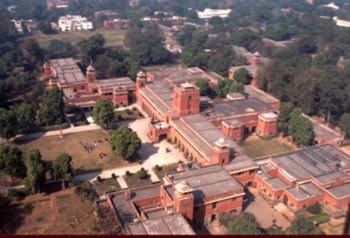
Enough has been said about 'Stephania' by people more experienced than me. My first introduction to the hoopla around 'Stephania' was an article by Shashi Tharoor for Delhi Times where he wrote about what made Stephens special. Among things he said was the fact that in St. Stephen's, religion and region did not matter and the pursuit of knowledge and intellect was given precedence over scoring marks, rote-learning and the like. The merits and demerits of his arguments, and whether they are valid over a quarter century after he left college, is something I do not find myself qualified enough to comment on. Instead, what I can comment on is what difference I see in St. Stephen's today from other colleges of Delhi University.

The idea of teaching in St. Stephen's going beyond the textbooks and examinations is slowly, and surely, dying out. Not to say that the blame can be rested on the faculty of St. Stephen's College - it would be more appropriate to blame the suffocating nature of the DU syllabus since it leaves colleges with little time to pursue their own charters. Education in DU is being turned into a McAloo tikki burger - you get the same taste wherever you go. Whether that's a good thing or not (I think it's abominable) is kept for later discussions.

What I argue in this piece is that what is unique to St. Stephen's College is its small size - 1200 students - studying a large number of courses - 10 in total - across a variety of disciplines. What this results in is greater interaction between different ideas, and this is where I believe our college has the most to benefit from. I hence believe that expanding the number of seats might diminish, if not demolish, this unique advantage that we have.

The difference between previous evocations of Stephania and what I propose is that what I propose is tangible - it can very well be replicated by other colleges. I do not pin-point Stephania on intangibles such as the 'spirit', which is impossible to judge anyway. To conclude this point, I think we have a lot to gain by acknowledging that in a fast-changing world, wherein St. Stephen's is no longer considered the undisputed best arts college in India, we have a lot to gain by foregoing the old connotations of 'Stephania' and recognise what we actually have and then create fora for us to exploit it to the fullest.

As an aside, it is true that the pursuit of innovation in St. Stephen's College has been vanishing. In this context, there would be much merit in arguing that being associated with DU is harming St. Stephen's. There has to be greater room for the college to manage its own syllabus and evaluation parameters.